No expensive fresh-food shop required. Plan filling dinners around ingredients that last — beans, tomatoes, lentils, tinned meat, pasta and rice — and make cupboard food feel like a proper family dinner.
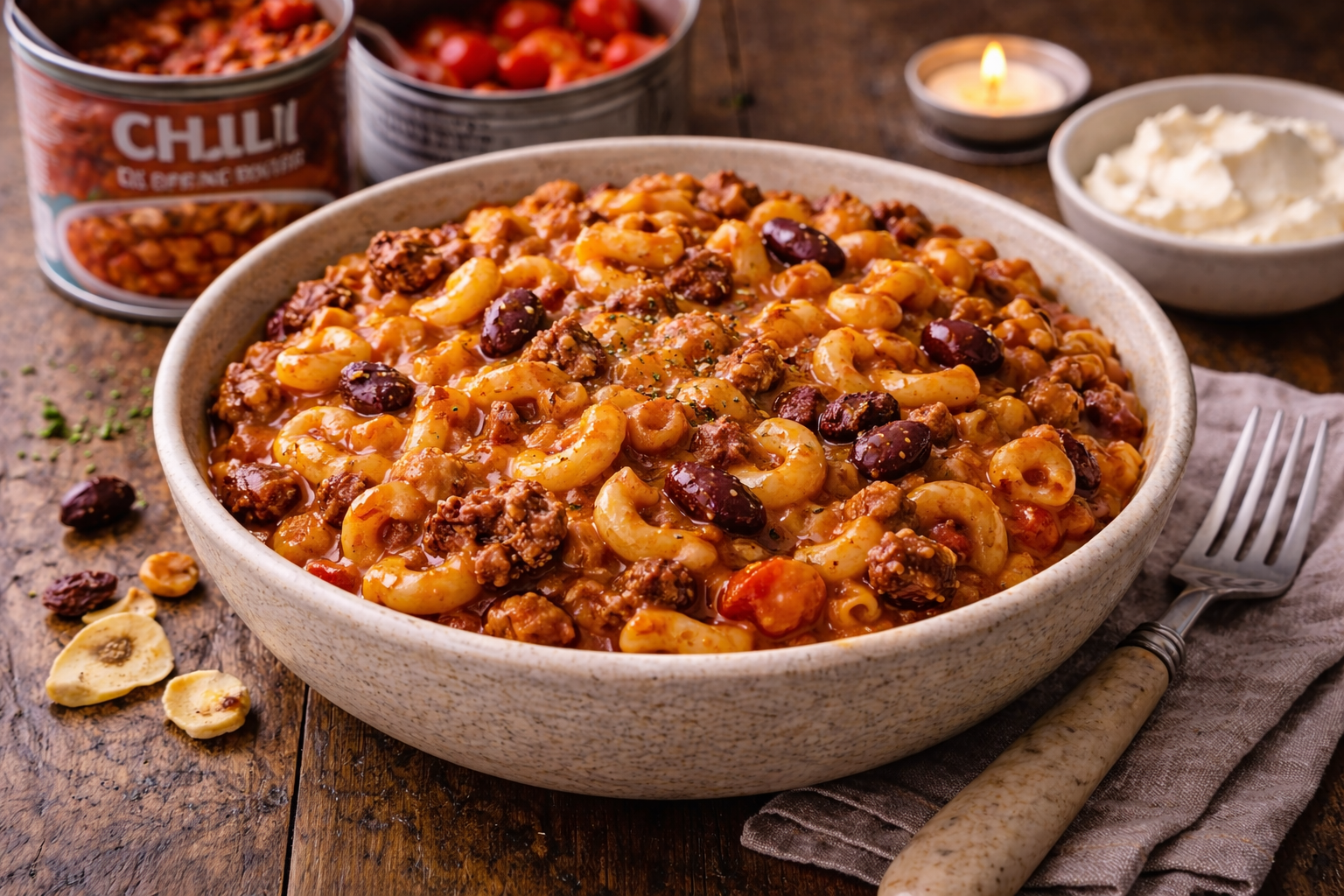
Tins, pulses and pasta stretch a small budget a long way.
Most dinners here serve three or four people.
Spice, sauce and a few clever tricks do the heavy lifting.
Four filling dinners from the cupboard
Proper meals, not just emergency rations. Swap an ingredient and each one still works.
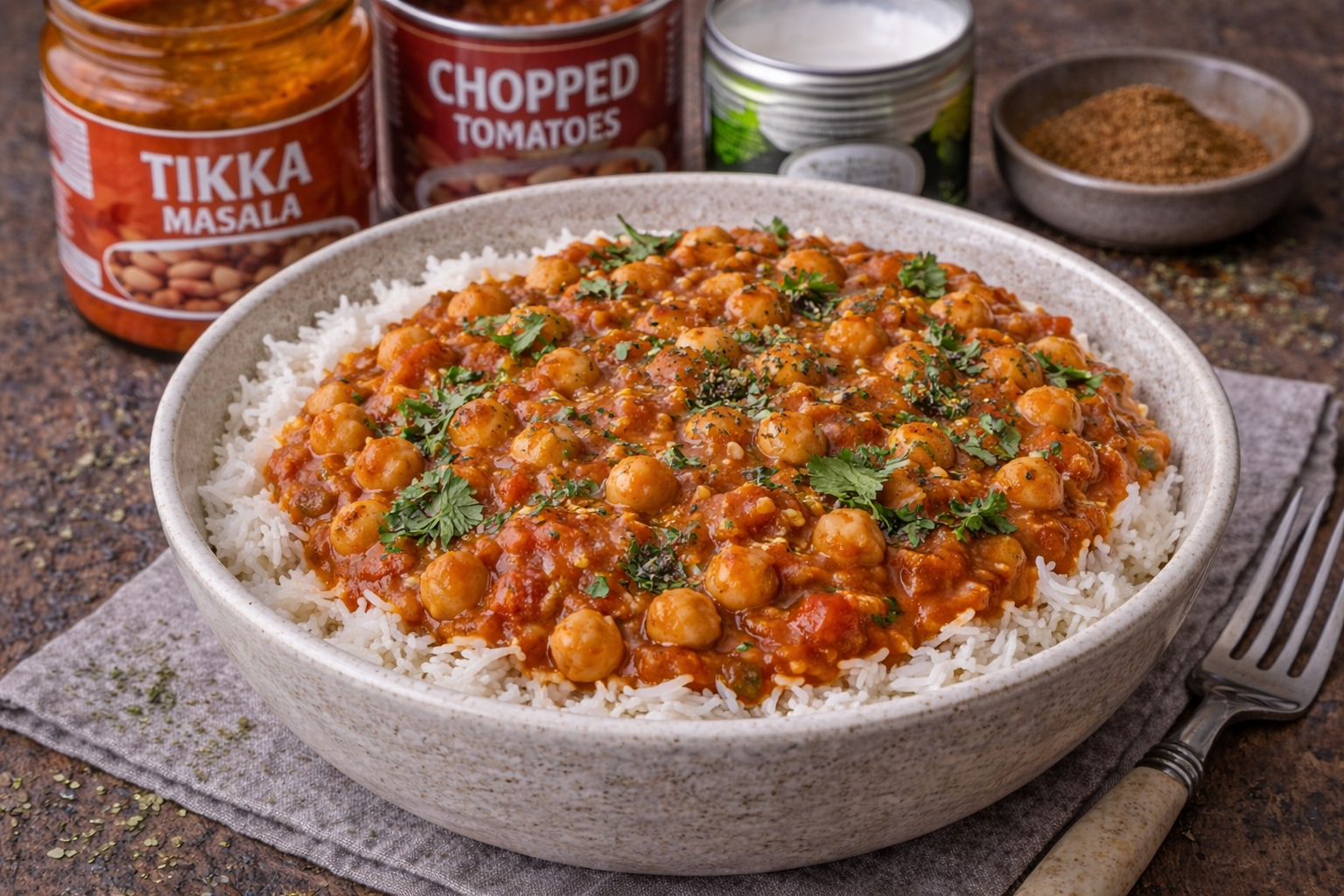
Lentil and Chickpea Curry
Pulses, tomatoes and spices simmered into a warm curry. The cheapest filling dinner on the list.
One-Pot Tinned Bean Chilli Mac
Pasta, beans and tomatoes in one pot, so there is less washing-up too.
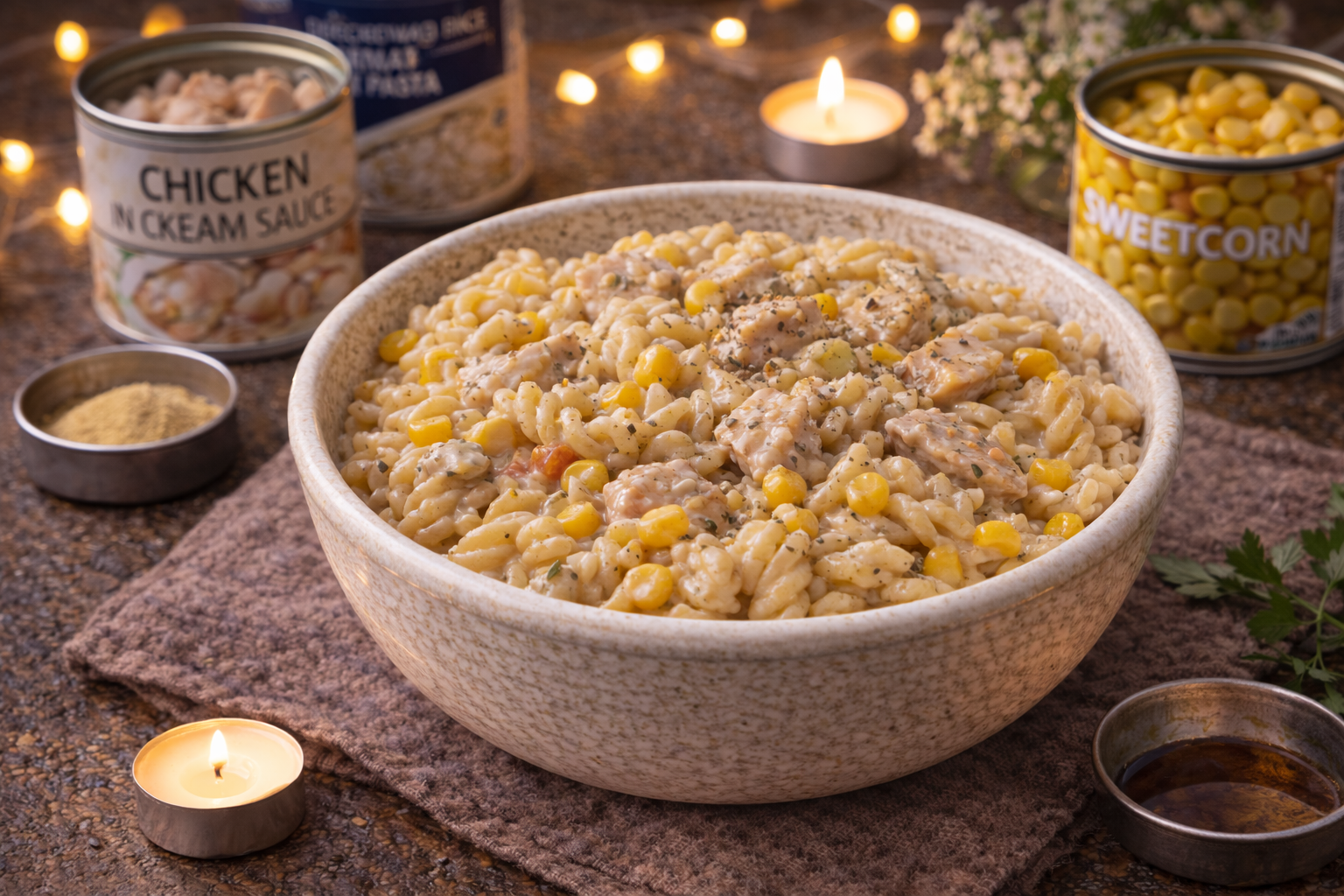
Creamy Chicken and Sweetcorn Pasta
Tinned chicken and sweetcorn in a silky UHT-milk sauce. Feels far more expensive than it is.
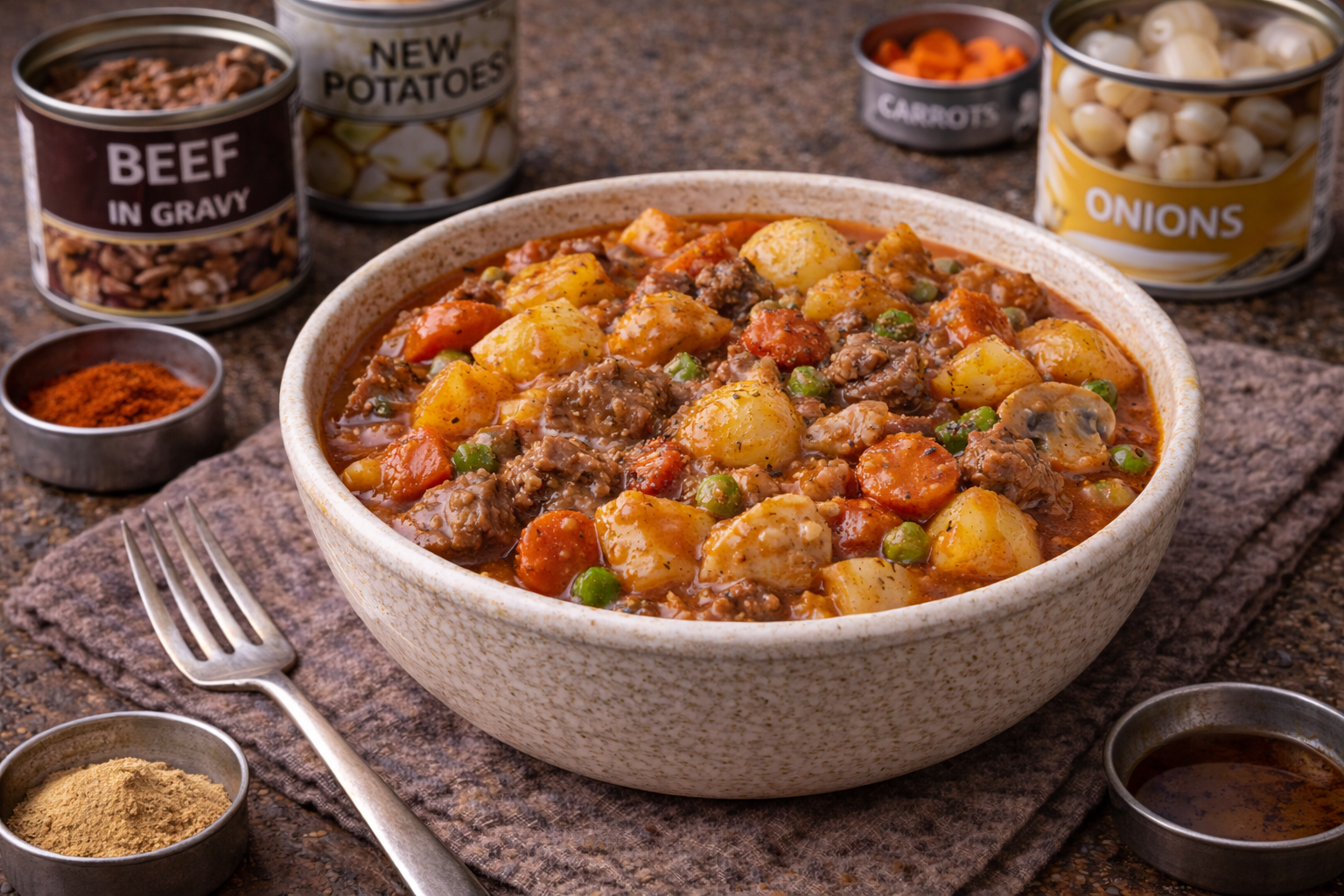
Tinned Beef and Potato Stew
Tinned beef and potatoes, lifted into a proper pub-style dinner with gravy granules.
A taste of what else is in the book
Satisfying Corned Beef & Onion Hash
Crisp, savoury and ready in minutes. A cheap pantry classic with a few tricks you will not find on a tin.
Full recipe inside Canned Cooking
Chilli Con Carne
A big, comforting bowl made entirely from the cupboard — the kind of dinner that stretches to seconds.
Full recipe inside Canned Cooking
Make a plan, save money
Start with a pantry meal formula
Build a balanced, satisfying meal from a protein or bean, a filling carbohydrate, a vegetable and a flavour base. A tin of tomatoes with beans can become chilli, pasta sauce or curry, depending on the spices you add. Costs differ by retailer and pack size, so price your own portions rather than trusting a permanently advertised ‘50p dinner’.
Three-day emergency pantry starting point for four
Choose enough shelf-stable foods to match your household’s tastes and dietary needs. Useful starting categories include pulses, tinned meat or fish, tinned vegetables, tomatoes, dry pasta, ready-to-eat crackers, UHT milk, oil, dried seasoning and a reliable source of safe drinking water. Check servings on the packaging and the heat and water needed before you buy. This is a meal-planning approach, not a complete emergency supply calculation.
Make a grocery list that actually works
Check the number of meals each ingredient will make, not just how many tins you own. Choose meals that share staples to reduce waste. Prioritise the food your family already eats. Rotate stock using the oldest appropriate products first; check intact packaging and the label before use.
Try next: Tinned food recipe guide and No-power cooking guide.
Prefer something with no heat at all? Try the no-cook sardine and white bean bowl.
Food safety: always follow the appliance and packaging instructions. Never use barbecues, charcoal burners or outdoor camping stoves indoors. More details at BurnSafely.com.
Keep exploring
Tinned food recipes · Budget pantry meals · No-power cooking · No-cook sardine and white bean bowl · Lentil and chickpea curry