If the electricity or gas is out, the first question is not “how do I light a stove?” It is “what can I safely eat without one?” Start with food that needs no cooking at all.
How every recipe is rated
Every recipe in Canned Cooking is labelled by how much heat it needs, so you can pick the right meal for the situation.
Open, mix, eat. No heat of any kind.
Soaking softens food but does not cook it. Only use products confirmed safe to eat without heating.
Use only an appliance approved for your location. Outdoor camping stoves must stay outdoors.
Cook fully with an appropriate approved appliance. Candles are not suitable for cooking food.
Five meals that need no power
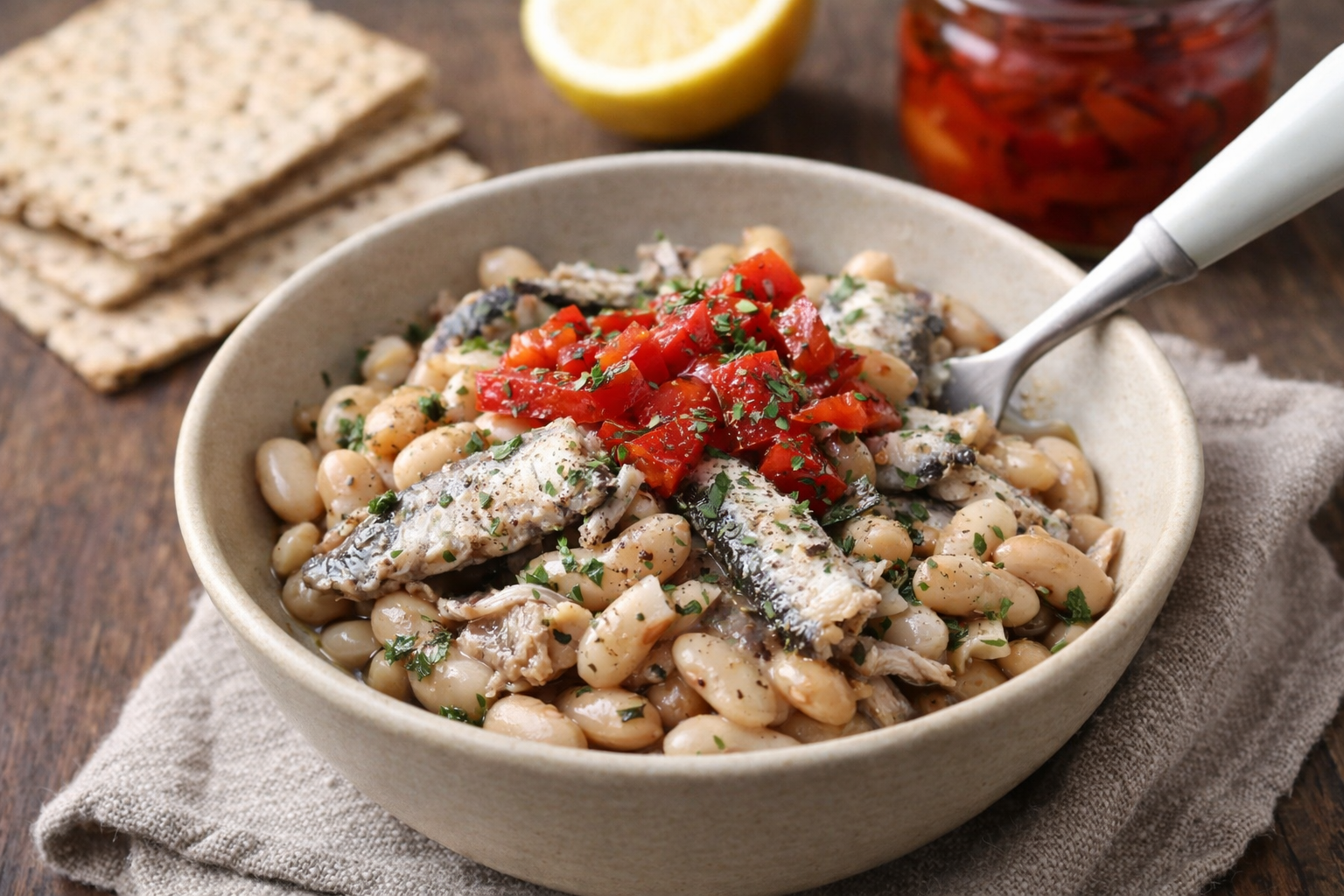
No-Cook Sardine and White Bean Bowl
Protein, fat and carbohydrate from two tins in about ten minutes. If you have nothing else, this feeds you.
Cold Oat Breakfast
Yes, uncooked. Oats soaked in long-life milk turn creamy, with tinned fruit and honey on top. A Scandinavian morning habit.
Full recipe inside Canned Cooking
Middle Eastern Chickpea & Tahini Bowl
Chickpeas, tahini, lemon and cumin. A near-complete protein with no heat source and no cooking.
Full recipe inside Canned Cooking
Tuna, Sweetcorn & Mayo Filling
High-protein and quick. Eat it from the bowl or spread it on crackers when the cooker is off.
Full recipe inside Canned Cooking
Peanut Butter Noodles — a safe no-heat option
Cold soaking softens noodles but does not make uncooked foods safe. For a no-heat peanut-noodle bowl, use noodles clearly labelled fully cooked and safe to eat without reheating, then add a peanut dressing. Follow the packet: noodles that require boiling must be cooked with heat.
Survival Cooking During a Power Cut: Start With No-Heat Meals
Survival cooking is not about buying expensive camping food or taking risks with improvised heaters. During a prolonged blackout, begin with ready-to-eat, shelf-stable foods that need no heat, little washing-up and a manageable amount of safe drinking water. Check every label: some packaged foods still need thorough cooking before they can be eaten.
A practical prepper cookbook should distinguish meals you can serve immediately from recipes that require a safe cooking appliance. For a genuine no-power option, try our sardine and white bean bowl. If you have a suitable, manufacturer-approved heat source and safe water, more substantial lentil and chickpea curry or one-pot chilli mac can become part of your survival recipes menu.
What to plan before you need it
Choose three no-cook meals your household would genuinely eat; count actual portions, calories, allergens and opening tools; and check safe water availability. Keep a printed shopping and meal list in case phones and broadband stop working. Never use an outdoor stove, barbecue or charcoal burner inside a home or tent, because carbon monoxide can kill.
No-power know-how
Food you can prepare without power
Choose ready-to-eat food labelled as suitable to eat straight from the packet or tin. Possibilities include ready-to-eat tinned fish, cooked beans, sweetcorn, tinned fruit, crackers and some long-life breads. Check labels and allergens; do not assume every canned or pouched product is ready to eat uncooked.
Three no-heat meal combinations
- Sardine and white bean bowl: tinned fish, white beans, olive oil and herbs. See full recipe.
- Chickpea and sweetcorn salad: drained ready-to-eat chickpeas, tinned sweetcorn, oil and dried herbs.
- Bean-and-tomato crackers: ready-to-eat beans with drained tinned tomatoes and suitable crackers; use straight away.
What about rice, pasta and raw ingredients?
Dry rice and pasta require water and appropriate cooking heat. During a power cut, avoid planning your only meal around ingredients that cannot be made edible with your actual equipment. Pre-cooked ambient pouches can differ in whether they must be reheated; follow each packet’s directions.
Cooking equipment and carbon monoxide
Never light a charcoal barbecue indoors or bring an outdoor camping stove into a kitchen, tent, caravan or garage. Carbon monoxide is poisonous and can be fatal. Only use appliances explicitly approved by their manufacturer for the actual location and ventilation available. Indoor cooking and heating guidance, plus emergency-equipment considerations, are available at BurnSafely.com.
Food and water hygiene when the fridge is off
Keep refrigerator and freezer doors shut where possible, and use official food safety guidance to assess what is safe after an outage. Do not taste food to decide whether it is safe. Once a tin of meat, fish or beans has been opened, treat the contents as perishable. Without reliable safe refrigeration, prepare only what you can eat straight away and discard leftovers. Keep clean water available for drinking, preparation and handwashing.
Build a no-power menu before the power goes
Write down two breakfasts, two lunches and two dinners your household would actually eat without electricity. Count the tins, calories and protein based on real labels, and check whether opening tools, safe water and eating utensils are available. Adapt for children, older adults and dietary requirements.
For everyday meal inspiration, also visit budget pantry dinners and tinned food recipes.
Safe indoor cooking
Never use barbecues, camping stoves or fuel burners in an unventilated space: carbon monoxide can kill without warning. Read the BurnSafely guide to safe indoor cooking and fire safety before you rely on any improvised heat source.
Food safety: always follow the appliance and packaging instructions. Never use barbecues, charcoal burners or outdoor camping stoves indoors. More details at BurnSafely.com.
Keep exploring
Tinned food recipes · Budget pantry meals · No-power cooking · No-cook sardine and white bean bowl · Lentil and chickpea curry